

Why Leadership Feels Heavier Than It Did Five Years Ago

Leadership has never been easy. But ask almost any leader today and they’ll tell you the role feels fundamentally different than it did just a few years ago.
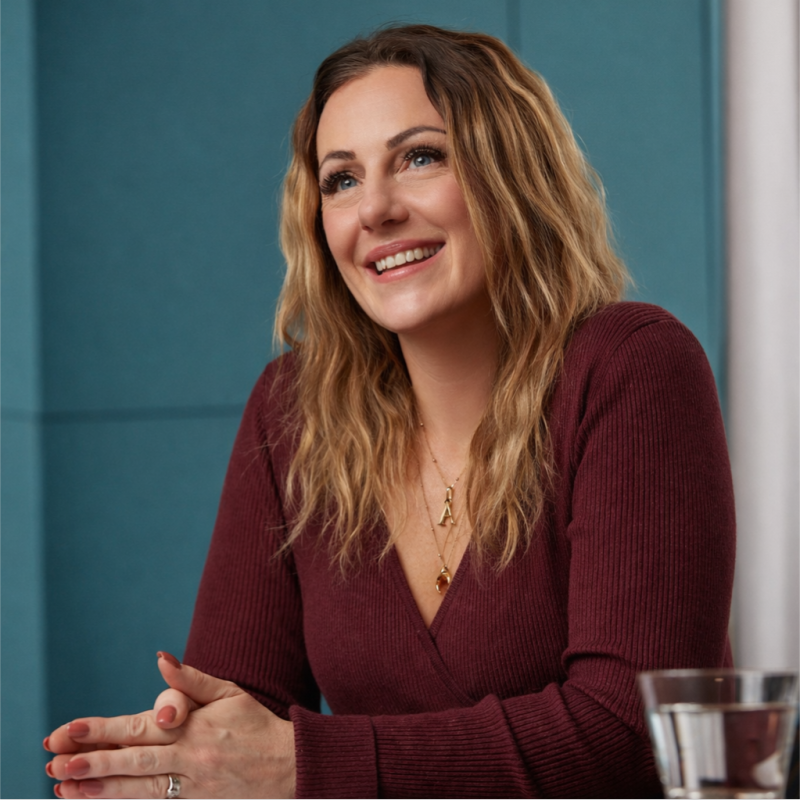
We sat down with Talking Talent CEO Mary-Clare Race to talk about what’s changed, why so many leaders feel stretched, and what organisations need to do differently if they want leaders to thrive…not just cope.
I think COVID was an inflection point. It accelerated changes that were already underway. People began thinking differently about the relationship between work and life and expectations shifted.
At the same time, technology and AI have made us more connected digitally. But, in many ways, we’re less connected through the community groups and structures that used to support us.
When those traditional sources of stability become less certain, people naturally look elsewhere. Loneliness has become an epidemic in its own right, and work hasn’t escaped it. And yet, for many people, the workplace is now one of the few communities they have left.
That’s why employees are asking a lot of their leaders today, often without even realising it. They’re saying:
“Help me grow. Challenge me, but don’t overwhelm me. Coach me, but don’t micromanage me. Support my wellbeing. Help me navigate my career. Create a team where I feel like I belong. And keep us performing.”
Those aren’t unreasonable expectations. But taken together, they’ve fundamentally changed what leadership looks like.
There’s more uncertainty now than at any point we can remember, and it’s operating at every level, personally and professionally. Economic pressure, geopolitical instability, and rapid technological change.
Researchers describe it as a “polycrisis,” because these disruptions are arriving one at a time. They’re overlapping and feeding each other.
And one thing we sometimes forget is that leaders are people too. They’re navigating the same uncertainty as everyone else. They’re asking questions about their own careers, their own families, and what technologies like AI might mean for their future.
At the same time, they’re expected to provide clarity and confidence for everyone around them.
That’s where the heaviness comes from. It’s not just more work. It’s carrying more responsibility, often without any reduction in everything else they were already expected to do.
Absolutely.
For years we talked about resilience and change management. Those conversations are still important, but I think we’ve moved beyond them.
I’m much more interested in what it means to thrive through uncertainty.
Nassim Taleb writes about the idea of being anti-fragile. It’s not simply surviving pressure, but actually becoming stronger because of it.
That’s the shift we’re seeing. The goal isn’t simply helping leaders recover from disruption. It’s helping them develop the mindset and capabilities to navigate uncertainty with greater confidence and ease.
Too often, organisations respond to every new challenge by adding another expectation onto leaders.
Need to adopt AI? Leaders will handle it.
Need to improve wellbeing? Leaders will handle it.
Need to strengthen culture? Leaders will handle it.
Of course leaders have a critical role to play, but I sometimes think it’s a little lazy to assume every organisational challenge should simply be passed down to leaders.
Sometimes we need to stop and ask a bigger question. Like, do we need to redesign the organisation itself to meet today’s reality?
First, recognise that leadership now requires a different skill set. So much of what employees are asking for is relational.
Coaching, listening, empathy, the ability to have honest conversations and build genuine connection. We tend to file those under soft skills, but relational capability is fast becoming the core of the job.
That means investing in coaching, creating opportunities for leaders to learn together, and making peer connection part of leadership—not something people have to find for themselves.
It’s also about being much clearer about what leaders are genuinely accountable for. We can’t keep adding responsibilities without creating the capacity to deliver them.
I also think we need to evolve our thinking.
For a long time we’ve focused on psychological safety, which remains incredibly important. But thanks to Talking Talent team psychologist Scott Rutter, we’re starting to explore another idea: psychological capacity.
That’s about helping leaders become comfortable with discomfort. Building the confidence to make difficult decisions, navigate ambiguity, and keep moving forward even when there isn’t a perfect answer.
I’d encourage leaders to reframe uncertainty. We often experience uncertainty as something to eliminate, when actually it’s where possibility lives.
One practical idea I really like comes from innovation expert Nathan Furr, who talks about creating “uncertainty balancers.” These are small routines or rituals that provide stability when everything else feels unpredictable.
That might be protecting time every Thursday morning for strategic thinking, keeping regular coaching conversations, or maintaining routines that create a sense of control.
You can’t eliminate uncertainty.
But you can create enough stability around it that you’re able to lead through it with confidence.
**
If your organisation is asking more of its leaders than ever before, it may be time to rethink how you equip them to succeed. If you’re rethinking leadership development, coaching or organisational change, we’d love to help.